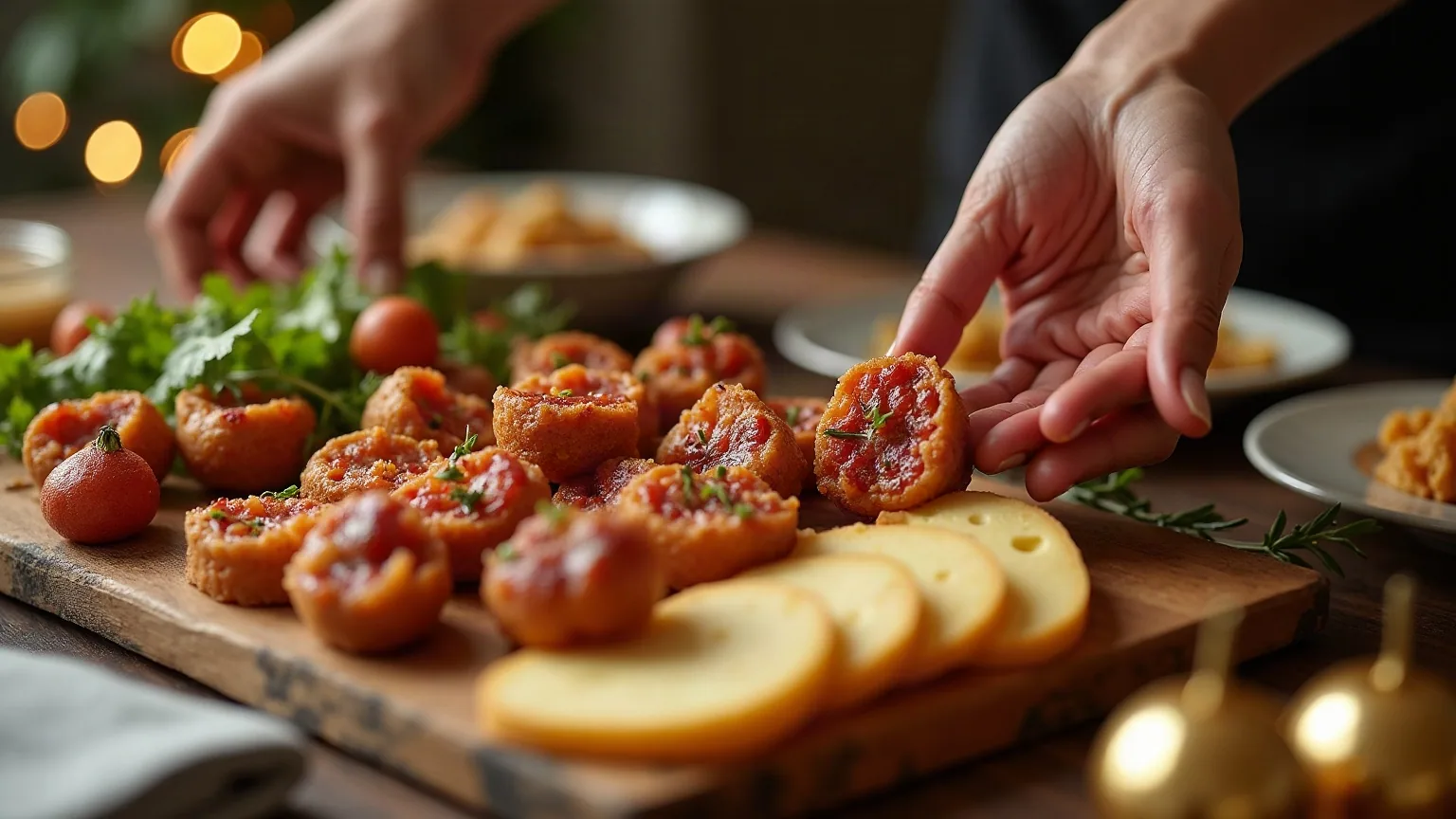
Here are three complete formats with quantities: a grazing party for 24, a sit-down buffet supper for 12, and a late-night gathering for 20. These numbers are realistic starting points for each scenario rather than fixed rules. Before you shop, confirm your actual guest count, how long people will stay, whether they'll have eaten beforehand, and any dietary requirements you need to cater for.
If you need an overall schedule for the evening, read New Year's Eve party ideas. This guide focuses strictly on the food, timing, and kitchen workload. For longer cold-only spreads, our cold buffet food guide goes into more detail.
Decide whether you're serving snacks or a meal
| Invitation promise | What your food needs to do | Best format |
|---|---|---|
| "Drinks and nibbles, 8 pm till late" | Keep guests comfortable, not replace dinner | Two waves of filling finger food plus sweets |
| "New Year's Eve supper at 7 pm" | Deliver a satisfying meal | One main with genuinely suitable alternatives, sides and dessert |
| "Join us for the countdown from 10:30 pm" | Provide a little late-night food | Pre-portioned savouries, snacks and easy sweets |
Write the food expectation on the invitation. An 8 pm gathering billed simply as a "party" might mean dinner to one guest and after-dinner drinks to another. That single misunderstanding causes far more stress than deciding between crackers and pastry bites.
Menu 1: A 24-person grazing party, 8 pm to 12:30 am
Assume most guests have already eaten dinner. Use five savoury portions plus one small dessert each as a planning starting point. That works out to 24 × 5 = 120 savoury portions and 24 × 1 = 24 sweets: 144 individual portions total. A portion here means one sensible finger-food unit or a pre-portioned vegetable cup, not a handful of olives.
| Food | Portions | Serve |
|---|---|---|
| Baked savoury rolls, including an appropriate meat-free batch | 48 | 24 around 8:30 pm, 24 in a later fresh batch |
| Wrap pinwheel halves with two clearly distinguished fillings | 48 | 24 at 9 pm, 24 later from chilled storage |
| Vegetable and dip cups, individually portioned | 24 | 12 around 9 pm, 12 from refrigeration later |
| Small dessert cups or packaged mini sweets | 24 | Put out after 11 pm |
| Total | 144 | 120 savoury + 24 sweet |
Buying a couple of pastries that look vegetarian isn't enough if someone has an allergy to egg, milk, wheat, or something else. Check recipes, ingredient labels, and cross-contamination risks carefully. If necessary, keep designated allergen-safe portions separate from the main table.
Why this menu works: It offers a solid savoury base without four hot dishes fighting for oven space. You can replenish the main spread in batches instead of leaving food out all evening, and the dessert turns up close enough to midnight to feel celebratory.
How to prepare and serve the 48 pinwheel halves
If one wrap produces four suitable half-size pieces when sliced into quarters, you will need 48 ÷ 4 = 12 full wraps. If your wraps are smaller or you slice them differently, count your actual yield and adjust the shopping list accordingly rather than relying on guesswork.
Choose fillings that hold up well when made ahead, and keep them chilled right up until serving. If you're offering two varieties, slice them using clean boards and store them separately. Use a dedicated platter and a clearly labelled serving utensil for any dietary-specific options.
Menu 2: Supper for 12 before the countdown
If guests are coming for a full meal, plan one proper dinner rather than multiplying bite-sized snacks until your budget and prep time spiral. A baked-potato bar or rice-and-toppings supper lets you cook one generous, filling base while handling toppings independently.
Example menu:
- 12 substantial baked potatoes (or a weighed rice serving appropriate to the chosen recipe), plus one optional reserve only if the guest list is uncertain.
- Two topping choices: a safely cooked meat-based filling for eight pre-confirmed guests and a bean/vegetable filling for four. These are eight and four, not twelve of each.
- Two sides: leafy salad, with dressing served separately, and a cooked vegetable side. Allow 12 side portions of each if guests are expected to take both.
- Bread or tortilla chips: optional, and only after confirming portions and dietary requirements. A large potato plus two sides may already be adequate.
- Dessert: 12 individual portions, with a suitable alternative for anyone who cannot eat the chosen one.
Check dietary requirements before shopping, especially if your menu involves varied allergen profiles. Never assume a vegetarian dish is automatically vegan, dairy-free, or gluten-free.
The useful supper timetable
| Time | Action |
|---|---|
| 4:30 pm | Verify ingredients, serving dishes, oven capacity and chilled storage |
| 5:30 pm | Prepare the base and toppings according to tested recipes or package directions |
| 6:30 pm | Set the table and chill the food that must remain cold |
| 7:00 pm | Guests arrive; offer simple drinks |
| 7:30 pm | Serve dinner, keeping cooked food at appropriate temperatures |
| 8:30 pm | Dessert and clear the main serving zone |
| 9:00 pm onward | Clear kitchen and enjoy the evening |
These are illustrative timings for running the evening, not cooking instructions. Safe preparation and cooking times depend on your specific recipes, appliances, and ingredients. Never treat a generic timeline as a substitute for a food thermometer or on-pack instructions.
Menu 3: Late countdown snacks for 20, from 10:30 pm
Most guests will have eaten before they arrive. Work with two substantial little bites per person as a baseline: 20 × 2 = 40 savoury snack portions, plus an optional sweet treat. You certainly don't need a second full-scale dinner at 11:45 pm.
| Food | Portion count | Practical advantage |
|---|---|---|
| Warm, baked savoury triangles from a verified recipe or product | 20 | One per guest as a starting amount |
| Individually plated toast or crispbread with a suitable topping | 20 | Ready to assemble without a long oven queue |
| Fruit skewers or dessert cups | 20 optional | One per guest, kept separate from savoury count |
Put the main spread out between 10:30 and 11:15 pm so everyone can eat well before countdown preparations begin. Avoid the temptation to fry anything at 11:56 pm. If guests stay on past midnight, bring out a fresh, safely stored small batch rather than topping up dishes that have sat out and been picked over all evening.
For children or people avoiding alcohol: Keep water, soft drinks, and caffeine-free options just as accessible and visible as alcoholic ones. Never build your menu or drink plan on the assumption that everyone drinks.
Four easy food assemblies that don't require elaborate cooking
These are assembly ideas rather than lab-tested recipes. Stick to fresh ingredients, follow reliable cooking instructions, and portion sensibly.
1. Individual hummus and vegetable cups
Spoon a dollop of hummus into individual small cups, then tuck in freshly washed vegetable sticks. Consider your guest list, as hard raw vegetables can be a choking hazard for young children. Keep them chilled until serving, and note allergens clearly—almost all traditional hummus contains sesame.
Best for: Welcome drinks, mess-free grazing, and keeping track of portions at a glance.
2. Potato or polenta bites with separate toppings
Cook bite-sized potato or polenta rounds following your recipe, then top them with pre-cooked beans, roasted vegetables, or cheese. Avoid open self-service toppings if you need to strictly manage cross-contamination for allergic guests. Make sure you know whether your chosen toppings need to be served hot or can sit chilled.
Best for: A hearty vegetarian option that sits comfortably alongside meat dishes.
3. Two-flavour wrap pinwheels
Pick two visually distinct fillings, like roasted vegetables with herb spread and seasoned cooked chicken. Slice into neat, counted rounds, label the ingredients, and arrange them on separate platters. Keep them refrigerated until needed, and put them out in smaller batches if they won't be eaten quickly.
Best for: Prepping hours ahead and guaranteeing predictable portion sizes.
4. Individual chocolate-and-fruit dessert cups
Layer small portions of mousse, cake, or chocolate cream with fruit in individual glasses or cups. If your dessert relies on fresh cream or dairy, keep it properly chilled right up to serving. If a guest is dairy-free, provide a dedicated alternative rather than just scraping off the cream.
Best for: A midnight sweet hit that is far easier to hand around than slicing a large cake.
For more finger-food inspiration, see our guide to party finger food ideas for extra preparation ideas and recipes.
The New Year's Eve make-ahead plan
Three to seven days beforehand: Confirm attendance, arrival times, and dietary requirements. Settle on a menu that fits comfortably within your fridge and oven capacity, buy your shelf-stable supplies, and check through your recipes so there are no last-minute surprises.
One to two days beforehand: Prep items that keep safely for a couple of days, freezing where appropriate. Store allergen-safe dishes separately. Lay out your serving platters, tongs, napkins, labels, and rubbish bags so the serving area is ready to go.
On 31 December, afternoon: Finish fresh prep, and organise the fridge into first-wave snacks and late-night backups. Sketch out an oven timetable on paper so nothing clashes, set phone timers for serving windows, and check you have enough clean plates and spoons.
From 8 pm to midnight: Put out smaller platters and swap them over as needed. Keep backup food properly chilled or hot, and clear away lingering trays rather than tipping fresh food on top of stale leftovers.
Don't let a four-hour party become a four-hour buffet
Long New Year's Eve gatherings require extra care with perishable food. The US Food and Drug Administration recommends throwing away perishables left at room temperature for more than two hours (or one hour above 90°F / 32°C); cold food must be held at 40°F / 4°C or below, and hot food at 140°F / 60°C or above.
UK rules differ slightly. The Food Standards Agency guidance published by GOV.UK permits a maximum of four hours out of refrigeration for certain chilled buffet foods in specified conditions, with stricter limits in warmer temperatures, while advising that food should stay chilled for as long as possible. Four hours is a maximum under conditions, not a target for a New Year's party. Follow your local food safety guidance and manufacturer instructions; when in doubt, put out smaller platters and refresh them often.
Never leave meat, shellfish, soft cheeses, dairy dips, or egg dishes sitting on an ambient buffet table all evening. A shallow bed of melting ice rarely keeps food cold enough. And if you have guests with severe allergies, prepare their plates and utensils in advance rather than trusting a crowded, self-serve spread.
Shopping and kitchen-capacity checklist
- [ ] Final confirmed guest count and whether this is a meal or snacks.
- [ ] Specific portions for each main, savoury option and dessert—not guessed numbers of "platters".
- [ ] Dietary choices and ingredients recorded confidentially and accurately.
- [ ] Enough fridge space for any later wave, including drinks only if they won't crowd out perishable food.
- [ ] An oven schedule that finishes before the countdown.
- [ ] Clean utensils, separate labels, serving dishes, waste bags and a thermometer where needed.
- [ ] Water and non-alcoholic drinks available independently from alcohol.
- [ ] Safe plan for packing or disposing of leftovers without leaving them out after service.
A party food calculator provides a helpful baseline, but your actual dishes and portion sizes will dictate final quantities. You can use our party drinks calculator to sort out drinks in the same practical way.
Frequently asked questions
What food is best at midnight?
Bite-sized portions that require zero cooking at the eleventh hour: a warm tray pulled straight from holding, or individual sweet cups. Ensure items are kept at safe temperatures, and time food service around the countdown so you aren't stuck in the kitchen when midnight strikes.
How much food do I need if everyone has eaten dinner?
Work from a sensible portion count based on your guest list and party length. The 24-person grazing menu above allows for five savoury pieces and one dessert each over a long evening. Tweak upwards if your crowd has healthy appetites or plans to stay well into the early hours.
Should I cook everything ahead?
No. Only prepare dishes ahead that store and reheat reliably. Bringing out smaller, freshly warmed batches alongside chilled backups works far better than setting out one enormous buffet to sit at room temperature for hours.
Can I serve only finger food instead of dinner?
Yes, provided the invitation clearly promises drinks and nibbles. If your party spans dinner time, either offer something genuinely hearty or make sure guests know to eat before they arrive.
Recipe and safety research
- BBC Good Food's New Year's Eve party food collection — useful for choosing actual tested recipes rather than inventing cooking times.
- US FDA: serving safe buffets — service temperature and time guidance.
- UK FSA: food at community and charity events — safe cold holding and hygiene.
- Food Standards Scotland: chilling — fridge and party service guidance.