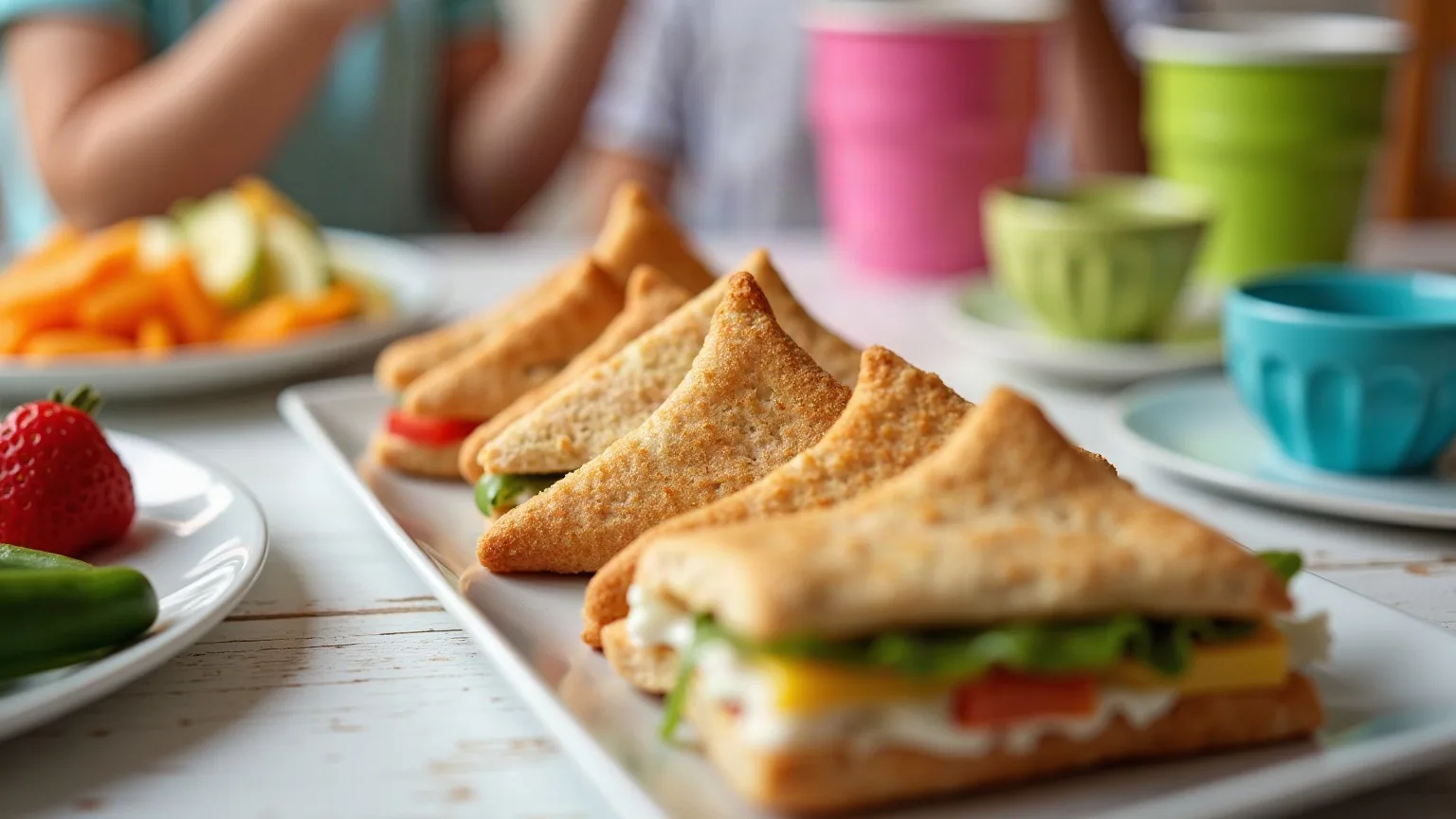
Here are sample food plans for 12 younger children, 20 primary-school-aged children and 30 older children. These portion sizes are starting estimates you can tweak for appetites, adult helpers, dietary requirements, and whether you're serving cake. They are not medical feeding guidelines and don't assume every child eats identical amounts.
Plan food around the timing, not the decorations
| Party format | Best menu approach | Tell parents and carers |
|---|---|---|
| Mid-afternoon, 90–120 minutes | One or two savoury snacks, fruit, cake and water | “Light snacks and birthday cake” |
| Lunch or early dinner | One filling main, vegetables or fruit, cake and water | “Lunch provided” or “Dinner provided” |
| Long activity session | Main meal plus a scheduled refill or snack | “Meal and snacks included” |
How you describe the party matters. A child arriving hungry for an expected lunch has very different needs from one turning up after lunch for a few games. Use the invitation to collect allergy and dietary details privately; a children's birthday invitation wording guide gives examples of how to ask without broadcasting a child's medical information to everyone.
First decide what counts as a serving. A “sandwich” might mean two full slices of bread, a half-sandwich, or a tiny finger-food quarter. Note the exact unit on your shopping list. The same goes for mini pizzas, cake slices, and snack packs.
Menu 1: twelve children aged roughly four to six, after lunch
Example party: 2:00–3:45 pm. Food at 2:45; birthday cake around 3:15. Parents have been told in advance to feed their children lunch at home.
| Food | Shopping or preparation target | What it covers |
|---|---|---|
| Small sandwich quarters | 24 quarters | Two quarters per child to start |
| Mild savoury finger-food pieces | 12 pieces | One extra savoury option each |
| Prepared fruit | About 1.2 kg | 100 g ready-to-eat fruit per child |
| Cake or cupcakes | 12 child-sized portions | One portion each |
| Plain drinking water | Refillable supply | Available for the whole event |
Sandwich maths: 24 quarters equal six whole sandwiches, assuming each full sandwich is cut into four. This is a light-snack plan, not a meal. Offer a few plain options and bring them out in small batches from the fridge. If you know a few guests have hearty appetites, increase the savoury items or update the invitation to let parents know you're serving a fuller meal.
Practical preparation: stick to manageable portions, such as soft bread with familiar fillings and safely prepped fruit. Always cut round grapes and cherry tomatoes lengthways into quarters for younger children, and avoid whole nuts for under-fives. The NHS advises against whole nuts for children under five due to choking risks, offering age-appropriate guidance on foods to avoid for babies and young children. Check texture and cutting advice for everything you put out, and make sure children sit down and are supervised while eating.
Don't confuse photogenic food with food that's easy to eat. Tall skewers, sharp cocktail sticks, and hard round sweets only invite avoidable trouble at a party for young children.
Menu 2: twenty children aged roughly seven to ten, party over lunch
Example party: 11:30 am–1:45 pm, with lunch served at 12:15. The food here needs to be far more substantial than the afternoon snack above.
| Item | Starting amount | How to handle it |
|---|---|---|
| Small filled wraps or rolls | 20 | One main portion per child; prepare a few extra if appetites vary |
| Vegetable sticks or cooked vegetables | About 1.6 kg | Roughly 80 g each as a planning allowance |
| Fruit pieces | About 2 kg | Roughly 100 g each |
| Cake portions | 20 | Serve after the main food |
| Water | Refillable source | Offer frequently; don't restrict access to a fixed serving |
These numbers assume a modest wrap or roll with a proper lunchtime filling. If you're cutting mini wraps in half, remember that two halves equal one full wrap—don't count two halves as two separate main meals.
Set up three labelled wrap options—say, cooked chicken with salad, cheese and cucumber, and roasted vegetables with hummus. These are purely examples rather than universally safe options: cheese contains dairy, hummus usually contains sesame, bread often contains wheat, and other fillings can introduce further allergens. Check every label and set aside a separate, safely prepared portion for anyone who needs it. Never promise food is “allergy-free” without knowing the child's specific allergies and verifying every ingredient and surface.
What about the adults? If five parents or helpers are staying, this menu feeds only the twenty children. Decide whether adults are eating a full lunch or just having tea and water; then increase the appropriate items rather than quietly expecting 20 rolls to feed 25 people.
Menu 3: thirty older children, simple hot-food service
Example party: 30 guests aged roughly ten to twelve, doing a sports or activity session followed by a hot meal. A single warm dish is usually much easier to manage than juggling six separate trays of finger food at safe temperatures.
Option: baked pasta with two sauces. Plan for approximately 150 g cooked pasta per child as a starting main portion, adjusting slightly for hearty appetites. Thirty × 150 g = 4.5 kg cooked pasta. Because pasta swells differently depending on the shape and cooking time, weigh a quick test batch once cooked to work out how much dry pasta to buy—never rely on a single dry-to-cooked ratio. Offer sauces, vegetables, and protein additions in portions matched to guests' actual dietary requirements.
Serving setup:
- Prepare one clearly labelled vegetarian sauce and one other sauce. Keep utensils separate.
- Keep hot food properly hot until service; use equipment capable of maintaining a safe temperature, not merely a decorative warming tray.
- Seat the group and serve in small waves, rather than leaving one giant pan on a table while children queue and jostle.
- Provide drinking water and a simple fruit or vegetable accompaniment.
- Make 30 cake portions if all 30 guests are being served cake; count any helpers separately.
This is not a fixed nutrition prescription; it's simply a practical baseline for a filling meal. Some pre-teens will eat more and others less. Check in with the birthday child and other parents, allow for seconds where you can, and never pressure children to clear their plates.
If you don't have the time or space to manage a hot buffet, pre-ordering is much simpler. If you go with pizza, our separate pizza quantity guide breaks down portions by diameter and slice size, so there's no need to repeat all the maths here.
Five useful food categories—and where each belongs
A straightforward children's menu usually works best with one item from each relevant category:
- Filling main: prepared wrap or roll, hot pasta, rice dish, or pizza. This should do the work of feeding guests if a meal is promised.
- Fruit or vegetables: easy-to-eat, safely prepared portions. A vegetable tray is most useful if children can reach it without disrupting a game.
- One extra savoury option: cheese cubes where suitable, a cooked savoury bake or another option that isn't just more bread.
- Birthday dessert: cake, cupcakes or a suitable alternative. You do not need three puddings plus sweets.
- Drinks: water as the default, with optional other drinks after checking parental expectations.
Resist the urge to crowd the table with every popular snack. Extra variety just means more prep work, extra allergy headaches, and piles of half-eaten leftovers.
Food allergies: have a system, not a vague promise
Ask parents or carers well in advance about ingredients to avoid, cross-contamination risks, suitable alternatives, and what their child's allergy plan involves. A child with a serious allergy should not be expected to guess from appearance or to eat food you cannot verify.
When preparing food:
- Read product labels each time, even if you've bought the same brand before; formulations can change.
- Keep ingredient packaging or a written ingredient list available to the parent or carer.
- Prepare any special option with clean hands, utensils and surfaces, away from ingredients that cause problems.
- Serve an individual, clearly identified portion if communal utensils could mix foods.
- Don't assume “vegetarian”, “vegan” or “gluten-free” automatically meets a different allergy restriction.
The Leeds Teaching Hospitals NHS guidance on managing food allergies at parties highlights the necessity of checking labels and preventing buffet cross-contamination. If you can't verify an ingredient list, don't claim it's safe. And if parents prefer to send a packed lunch for their child, welcome it warmly without drawing unwanted attention to them.
Keep the party food safe while games are running
Party food often sits out longer than intended, particularly if a party game runs over. Keep perishable backups in the fridge and put out smaller platters, making a mental note of when chilled items first left the fridge.
The US FDA's buffet guidance advises keeping cold foods at 40°F / 4°C or below, hot dishes at 140°F / 60°C or above, and throwing away perishables left at room temperature for longer than two hours—or one hour above 90°F / 32°C. Official advice can vary by region, so follow local food-safety standards and take the safer route if you're unsure. Simply leaving a bowl on a table won't keep food at a safe temperature.
Give children a clear break to sit down and eat rather than letting them run around with food in their mouths. Have fresh water easily available the entire time, not just during the meal.
A preparation timeline that keeps party day manageable
Three to five days before: confirm final headcounts and any dietary restrictions, pick your main food format, and double-check your fridge and oven space. You can run the kids' party food calculator for a quick baseline, but make sure its defaults match your plan.
The day before: pick up non-perishables, prepare whatever can safely sit overnight, wash platters, and label containers. Avoid mixing perishable fillings too early unless you have plenty of cold fridge space.
Two hours before: set up the table, drinks, and non-perishables. Mark out a clean, separate spot for allergy-safe food, and leave chilled items in the fridge until the last moment.
Just before the food break: finish assembling or heating food, check temperatures, and put out only what children will eat straight away, leaving extra batches chilled.
After eating: clear the table quickly, bin or chill perishables according to safe holding times, and pack away cutlery before moving on to the next activity.
Budget and waste: the simplest control is fewer categories
If you're catering for twenty children on a sensible budget, compare two approaches:
- Scattered snacks: sandwich bites, sausage rolls, mini pizzas, crisps, biscuits, cupcakes, fruit, sweets and juice. Different storage and preparation needs; difficult to know what counts as lunch.
- One complete lunch: wraps, one vegetable side, fruit, cake and water. The serving plan is clearer and guests know what to expect.
A simpler menu might not save money in every single supermarket, but it's vastly easier to calculate and won't leave you with opened packets across eight different categories. To map out your exact costs, run your local store prices through our party budget calculator.
Questions parents ask about birthday party food
How much food should I buy for twenty children?
Start by deciding whether you're serving a proper meal or just a light snack. For a lunchtime party, cater for twenty child-sized mains, one or two simple sides, a slice of cake each, and plenty of drinks, then adjust for ages, big appetites, adults, and allergies. Avoid applying a blanket “pieces per child” formula to completely different types of food.
What is the easiest birthday party food for kids?
One familiar main, a fresh fruit or vegetable side, and birthday cake. Keeping things simple makes it much easier to prep, serve, and safeguard against allergens than laying out an elaborate buffet.
Should I give children sweets or party bags as well?
They're completely optional. Birthday cake already covers dessert, so you don't need a mountain of sweets on top of it. If you're handing out party bags, decide whether the treats inside replace a dessert snack rather than buying both by default.
Can I prepare everything the night before?
Sort out your shopping, serving gear, decorations, and non-perishables the day before. Anything perishable needs proper refrigeration and careful timing. While some hot dishes can be prepared in advance, safe cooking, chilling, and reheating practices matter far more than how early you started.